Feminism and the ‚hidden transcipt‘ of Muslim-Christian relations in Egypt
In a brilliant paper, anthropologists Gaétan du Roy and Mina Ibrahim have argued that, behind the ‘public transcript’ (James Scott) of interreligious conviviality of Christians and Muslims in Egypt, there is also a ‘hidden transcipt’ in which Muslim and Christians complain about each other, voicing sentiments of mistrust, annoyance, anger and disappointment, “particularly Christians who live in an increasingly islamised public space.” (https://neighborglob.hypotheses.org/panel-11-shubra-a-neighborhood-in-cairo ) Both transcipts are real and sincere, like two sides of the same coin of coexistence.
One of the important legacies of the Egyptian revolution has been the increasing courage of intellectuals in addressing the hidden, painful sides of society, religion and personal life. In this spirit, a recently published novel by Karoline Kamil, “Victoria”, tells the coming-of-age story of a young Christian woman. Raised in a predominantly Muslim town in the Delta, Victoria’s childhood memories are deeply marked by the mistrust and fear her parents harboured towards Muslims, especially Salafis, the insults and humiliation suffered by a Christian schoolgirl in a conservative Muslim public school, as well as the secludedness, but also comfort, of church life.
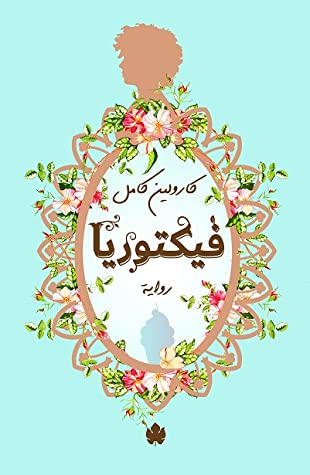
When the main narrative sets in, Victoria is leaving her hometown to move to a well-guarded Christian dormitory in Cairo, where she is supposed to start her studies. She does not feel the slightest inclination for studying, is lonely and absolutely terrified by the urban jungle. The dreariness of her life lightens up when the rebellious Heba becomes her roommate. Heba is slightly older and has specialized in failing regularly in her university exams in order to extend the life of relative autonomy that she enjoys in Cairo. Her rich family does not seem to mind very much, although she has already been expelled from several Christian boarding homes for her unruly behaviour. She likes to frequent the cafés of Downtown Cairo with her artist friends, including her Muslim boyfried Husam, who – according to Heba – “actually does not believe in anything at all”. Victoria is shocked, but also feels drawn towards Heba’s confident, flamboyant personality.
With the help of the budding friendship with Heba, Victoria gradually learns to overcome her social isolation, as well as her personal tensions and fears. The novel carries strong feminist overtones as it describes in excruciating detail how Victoria gradually discovers he femininity, emotional longings and sexual desires. But as much as her experience and self-confidence increase, Victoria also faces hard choices: How can she maintain her faith in God and the consolation she finds in religion, while at the same time avoiding the overbearing presence of priests and nuns? Should she marry Heba’s handsome and rich, but also bossy and macho cousin Yusuf? What is her real dream, her aim in life?
Caroline Kamil, Victoria (Cairo: Al-Karma, 2022).
 Sebastian Elsässer